Discovering Symmetry 🎨
Symmetry is a fundamental concept in mathematics, art, and nature. It describes how parts of an object or pattern are arranged in a balanced way. Let's explore its fascinating aspects!
Lines of Symmetry in Shapes 📏
A line of symmetry is an imaginary line that divides a shape into two identical halves, where one half is the mirror image of the other.
Equilateral Triangle
Lines of Symmetry: 3
Square
Lines of Symmetry: 4
Rectangle
Lines of Symmetry: 2
Regular Pentagon
Lines of Symmetry: 5
Regular Hexagon
Lines of Symmetry: 6
Circle
Lines of Symmetry: Infinite
Interactive: Folding & Punching Holes ✂️
Imagine folding a piece of paper and punching holes in it. When you unfold it, the holes will appear symmetrically! Click on the paper to punch a hole, then click Unfold' to see the symmetrical pattern.
Geometric Transformations & Symmetry 🔄
Symmetry is deeply connected to geometric transformations: movements that change the position or orientation of a shape, but not its size or form.
Rotation
Turning a shape around a fixed point (center of rotation) by a certain angle (angle of rotation).
Reflection
Flipping a shape over a line (line of reflection) to create a mirror image.
Translation
Sliding a shape from one position to another without rotating or flipping it.
Symmetry All Around Us! 🌍
Symmetry is not just a mathematical concept; it's prevalent in nature, art, architecture, and everyday objects, often contributing to beauty and balance.
Nature 🌿

Many animals (like butterflies), flowers, and leaves exhibit bilateral symmetry. Snowflakes show rotational symmetry.
Art & Architecture 🏛️

From ancient temples to modern buildings, artists and architects use symmetry to create visually pleasing and stable structures.
Everyday Objects ⏰
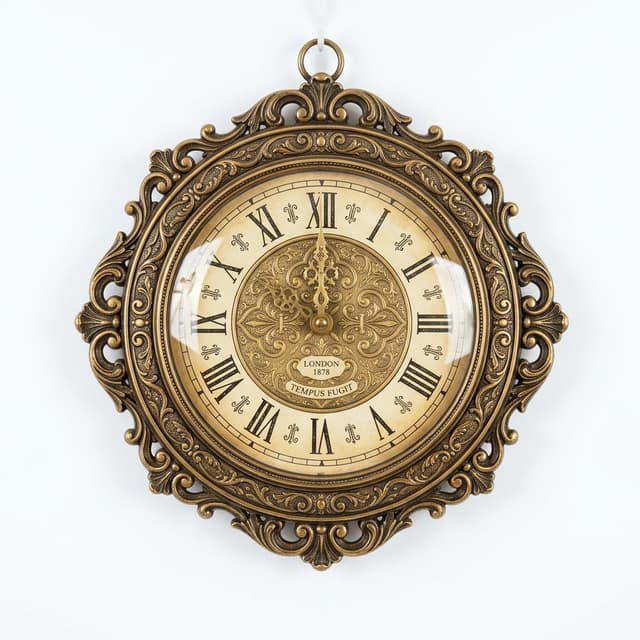
Many common items like clocks, steering wheels, and decorative items utilize symmetrical designs for both balance and aesthetic appeal.